
In what could lead to an overhaul of policy, the Union government is looking at a new sugar subsidy mechanism as part of its decontrol proposal. It plans to rope in state governments for the purchase and distribution of sugar to below-poverty-line consumers at market prices.
After briefly maintaining prices at par with public sector oil marketing companies following the June 25 price hike, private fuel retailers Essar Oil and Reliance Industries are selling petrol and diesel at a premium of Rs 0.50 to 2.50 per litre in some states.
GAIL India chairman and managing director B C Tripathi said the availability and possibility of gas has changed with the change in government policy.

The government has told Cairn Energy that its deal with Anil Agarwal-promoted Vedanta Resources will go through only after a formal proposal to the government is made and all clearances are obtained.

The government-owned Oil and Natural Gas Corporation, Cairn India's partner in the Barmer block in Rajasthan, is closely scrutinising the stake sale in Cairn India by Cairn Energy.
Technical bids opened today for Mallavaram-Vijaipur line, winner in three weeks.

In an interview with Ajay Modi & Jyoti Mukul, ONGC chairman R S Sharma says uncertainties continue in the business even after decontrol of petrol prices.
Shell India, the domestic arm of Royal Dutch Shell Plc, had offered for sale 20 of its 80 operational retail outlets and around 20 sites acquired earlier for setting up such outlets.

Share prices of both upstream and downstream public sector oil companies fell up to two per cent on Monday. Even Essar Oil, a private fuel retailer, fell 1.50 per cent on the Bombay Stock Exchange.
The sustained decline in the price of crude oil has reversed the trend in petroleum product pricing. Private retailers are looking to cut prices from next month, while public sector oil companies have shaved their losses on retail sale of petrol and diesel by more than half.
A price of $4.20 per million British thermal units is not viable for smaller gas discoveries, say industry experts.
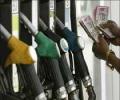
The subsidy burden of upstream oil companies, Oil and Natural Gas Corporation and Oil India Ltd, have risen 42 per cent in a single quarter.

Rural retail was supposed to cash in on the prosperity of Bharat, but the storyline hasn't really gone the way big corporate houses had hoped.
Rural retail was supposed to cash in on the prosperity of Bharat, but the storyline hasn't really gone the way big corporate houses had hoped.
The petroleum ministry has put on back burner the proposal to create a national gas highway development authority, following an opposition from the Petroleum and Natural Gas Regulatory Board, which currently has the powers to authorise pipelines.

Siphoning off food and fuel meant for the poor has made India's public distribution system ineffective.

However, storage capacity way behind even present public distribution system procurement need.
Delhi may become the first state to move to direct cash pay-outs of subsidies on kerosene sold through the public distribution system (PDS). The petroleum ministry said it has "welcomed" a proposal to this effect from the Planning Commission, which acted on a plan suggested by Delhi Chief Minister Sheila Dikshit.
"For 2010-11 and beyond, the Kirit Parikh report will be the benchmark. The report is being studied.These decisions are politically sensitive issues and have to be sustained over a period of time," Petroleum Secretary S Sundareshan told Business Standard. "It is impossible to insulate the Indian consumer against the movement in international oil prices."

'Prices can be adjusted now. The government can even temporarily cut taxes'.
 © 2026 Rediff.com - Advertise with us - Disclaimer - Privacy Policy - Sitemap - Feedback - About us - Terms of use - Grievances